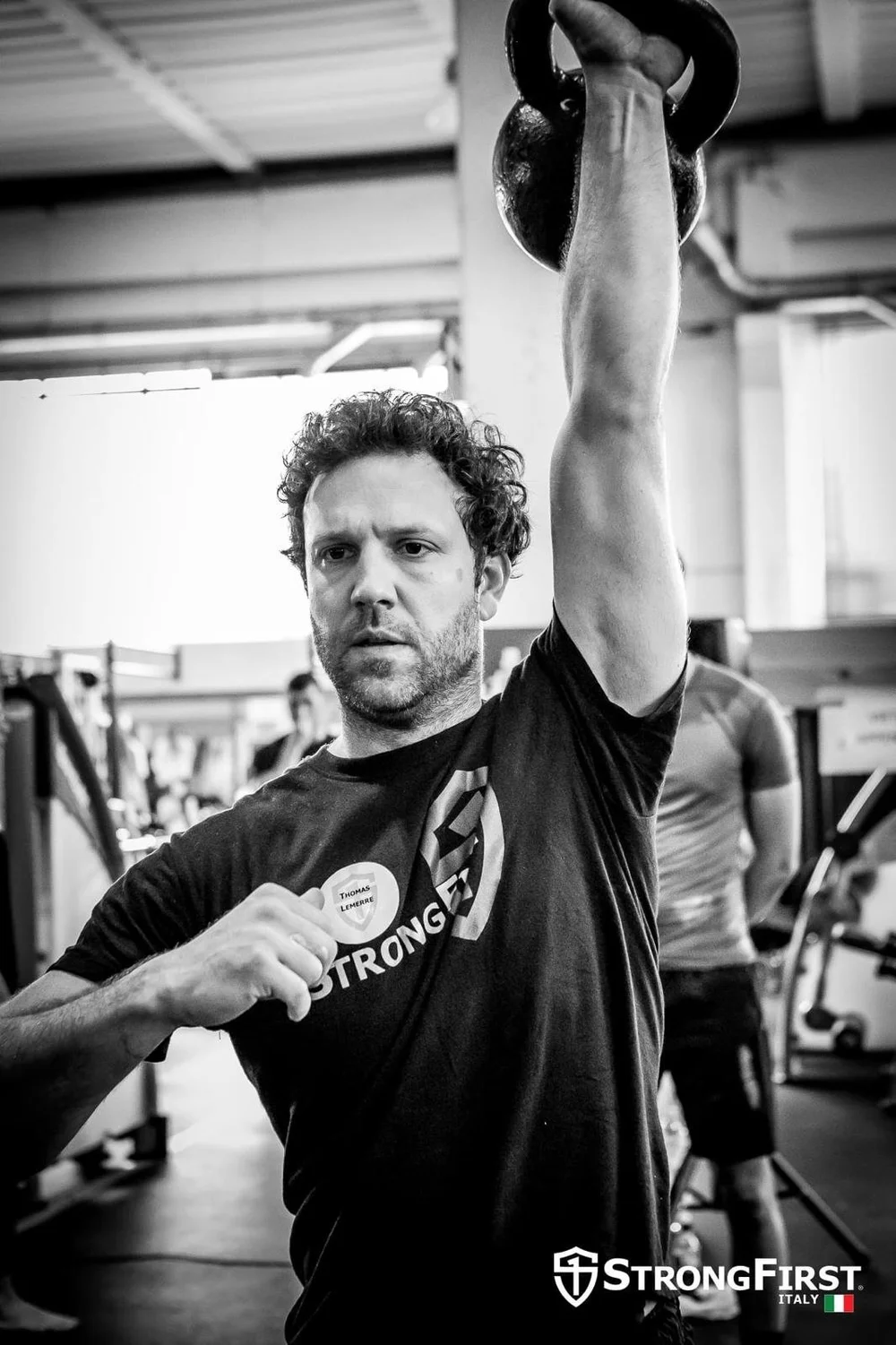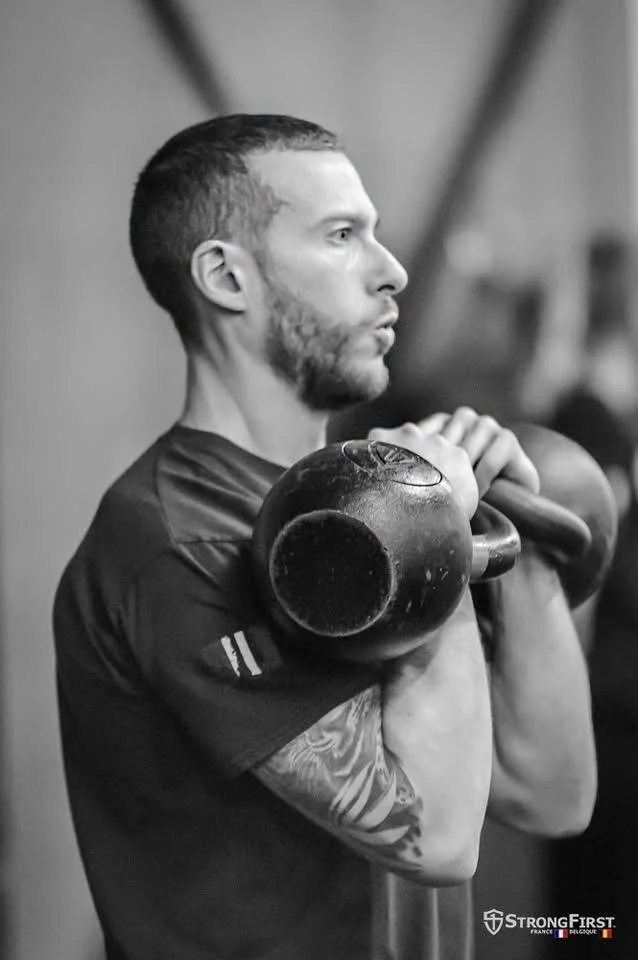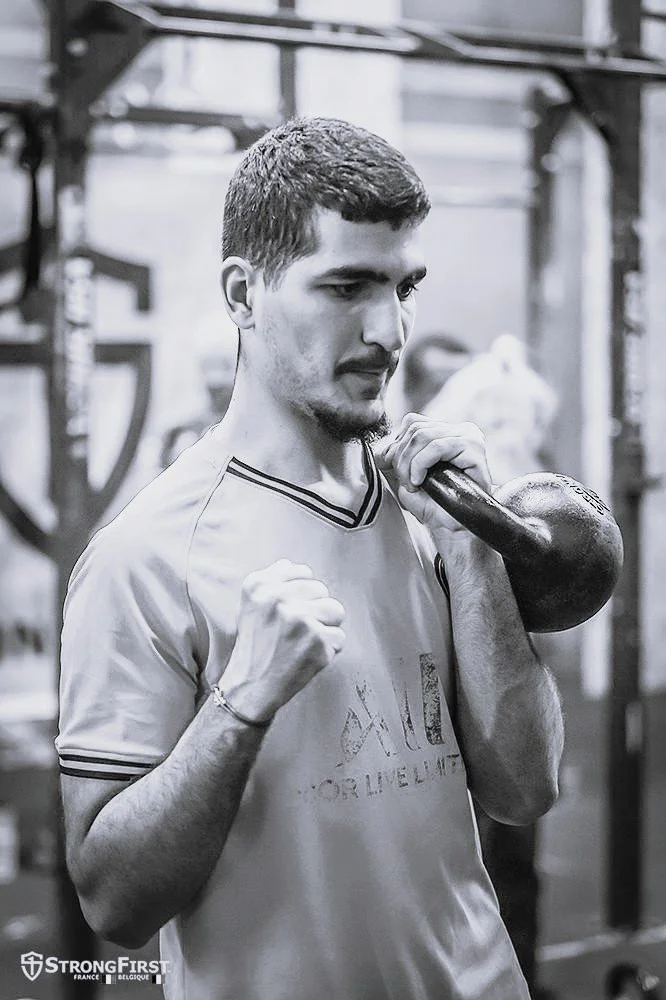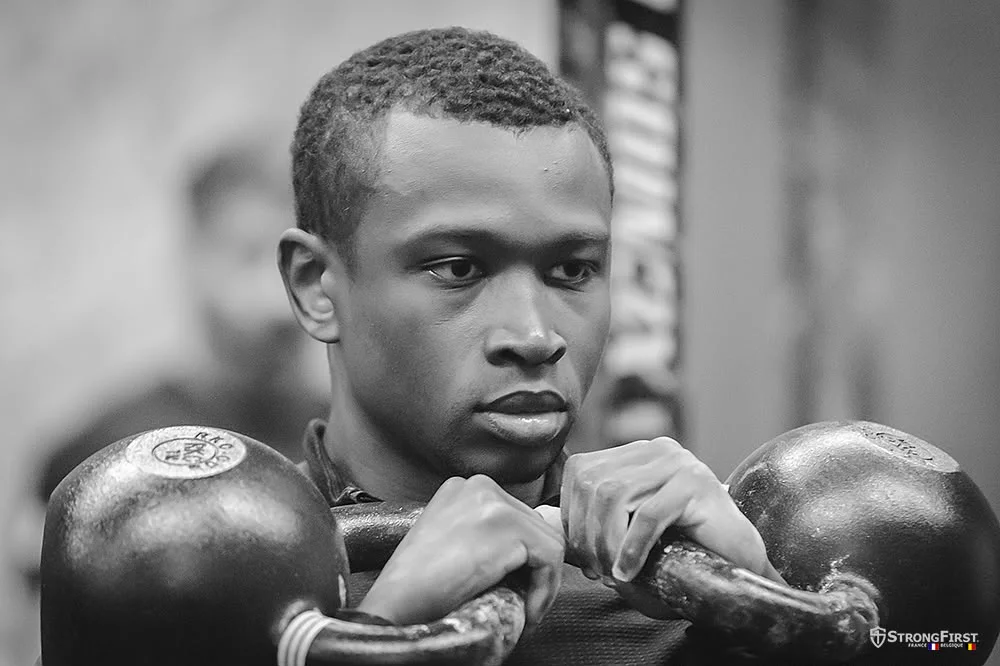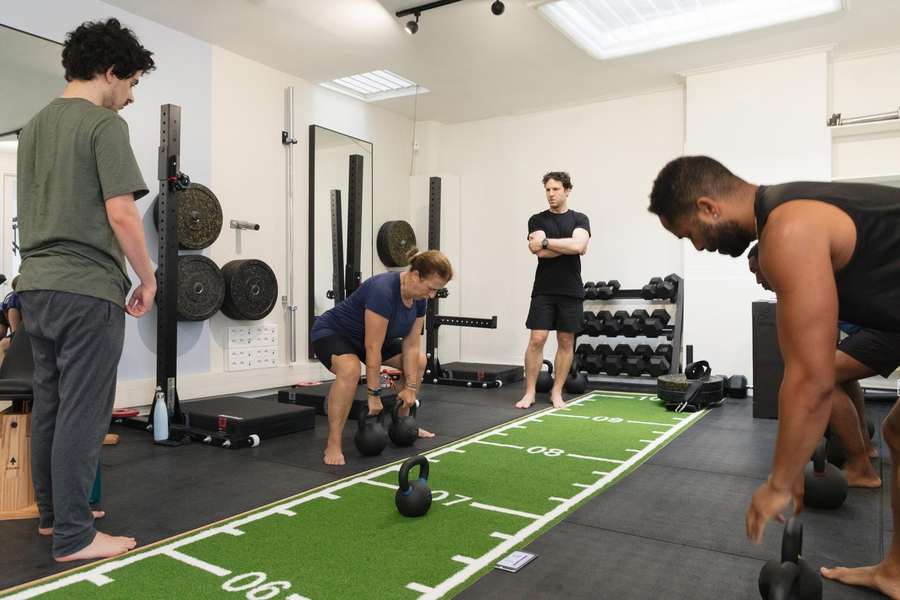
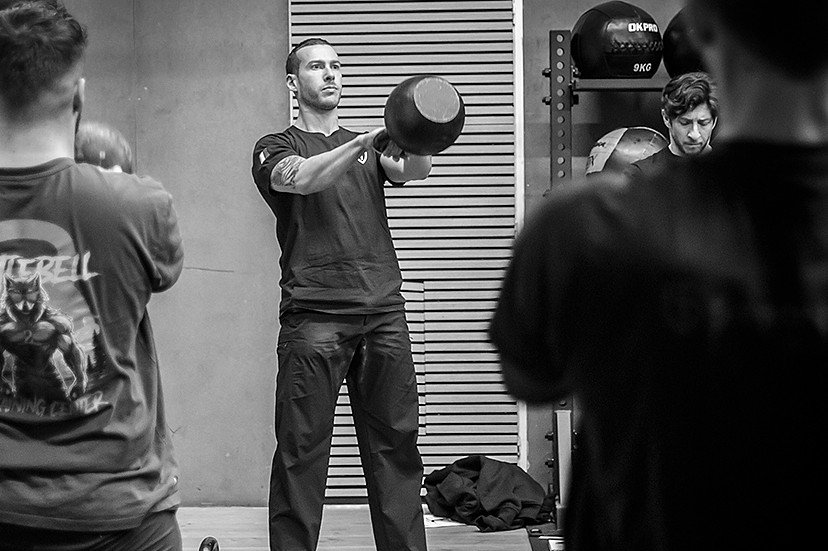
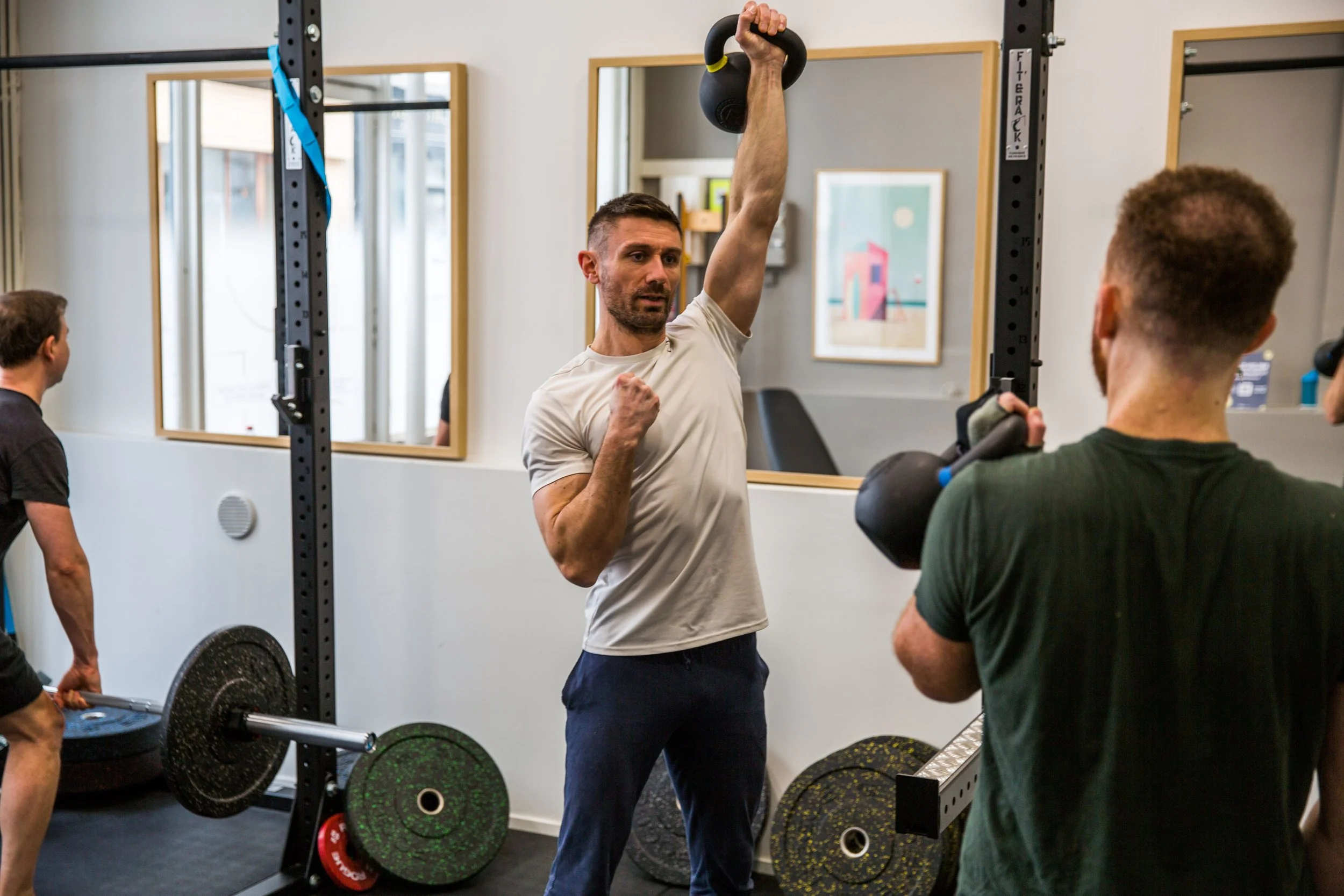
A member holds a kettlebell overhead at Milon-Club, Paris 11th

StrongFirst-certified coachesKettlebell classes in Paris 11th.

Strength, power, conditioning, a stronger back: the kettlebell is one of the most complete training tools there is. Learn to get the most out of it with StrongFirst-certified kettlebell coaches, in small groups, at 38 rue de Malte (Paris 11th, metro Oberkampf).

Benefits

Kettlebell training works your whole body with one tool.

A kettlebell is a cast-iron ball with a handle. Its offset centre of gravity forces the whole body to work together: legs, hips, core, shoulders and hands. That's what makes it one of the most complete tools for building strength, power, conditioning and resilience, with little equipment and in little time.

01

Build real-world strength and power

The swing trains explosive hip extension, the engine behind running, jumping and most sporting movements. The slow lifts (press, squat, get-up) build full-body strength.

Six weeks of swings improved maximal strength and jump power, to a degree comparable with jump training (Lake & Lauder, 2012).
02

Strengthen your back

The swing and the deadlift strengthen the posterior chain (glutes, hamstrings, back muscles), the muscles that protect your lower back every day.

In adults with musculoskeletal pain, 8 weeks of training reduced lower-back and neck pain and strengthened the back extensors (Jay et al., 2011).

03

Build an iron grip

Holding, swinging, stabilising: the kettlebell puts heavy demands on your grip. Good grip strength is linked to greater independence as you age.

In inactive 59 to 79-year-olds, 3 months of supervised "hardstyle" kettlebell training increased grip strength by about 7 kg (BELL trial, 2022).

04

Develop conditioning and endurance

Done back to back, swings and snatches raise your heart rate with no impact on the joints. You build endurance while still training strength.

In the BELL trial, six-minute walking distance improved by about 40 m and resting heart rate went down.

05

Move better, stay stable

The get-up and the goblet squat open the hips, mobilise the shoulders and teach the body to stay stable under load, in every position.

06

Progress in little time

A few well-mastered movements are enough for a complete session. Two to three sessions a week already bring visible results.

Who is it for?

What kettlebell training gives you, wherever you're starting from

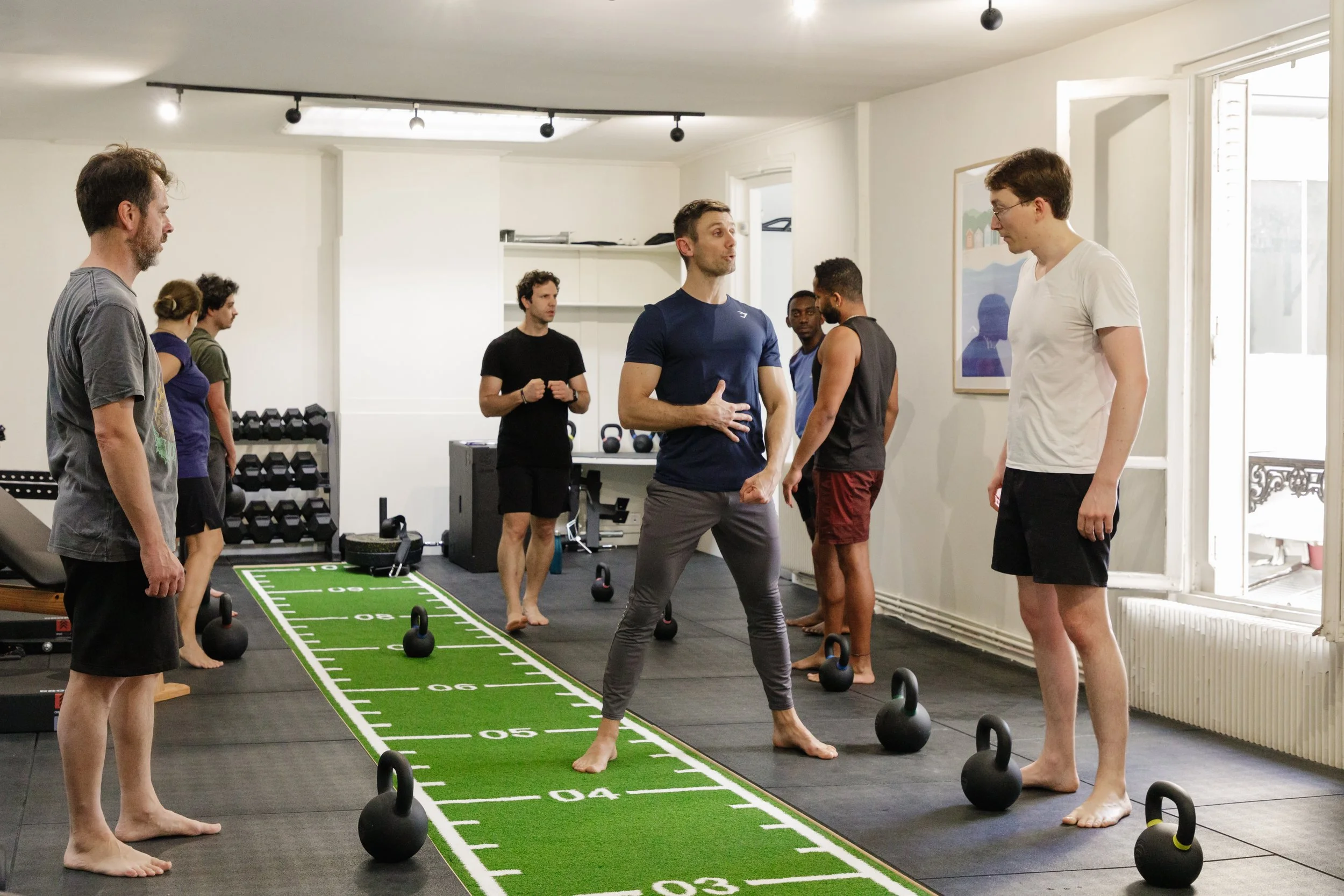
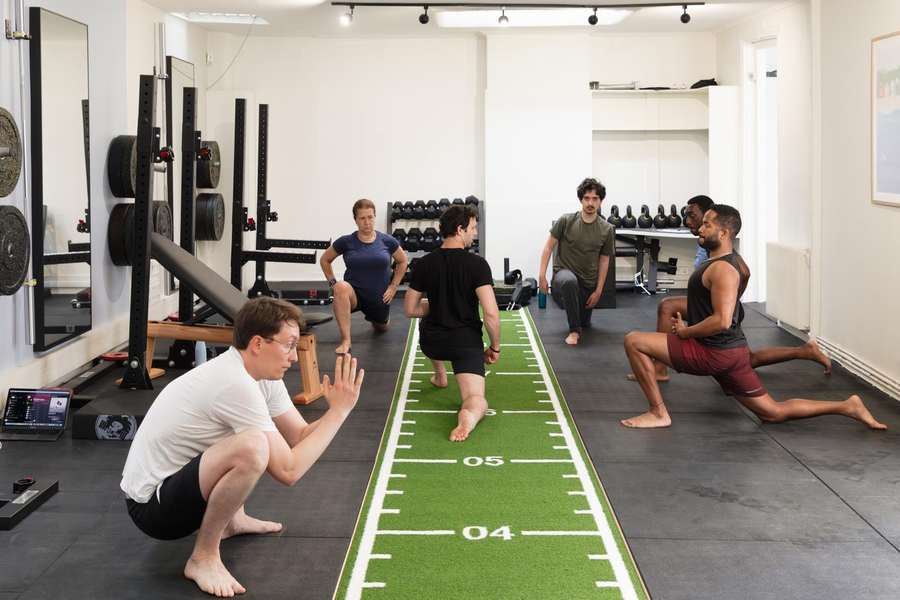
Small-group mobility class at Milon-Club

You're getting back into training after a break →

A simple tool to quickly regain strength and fitness, without a room full of machines. We start light, with the basics: hip hinge, core bracing, breathing.

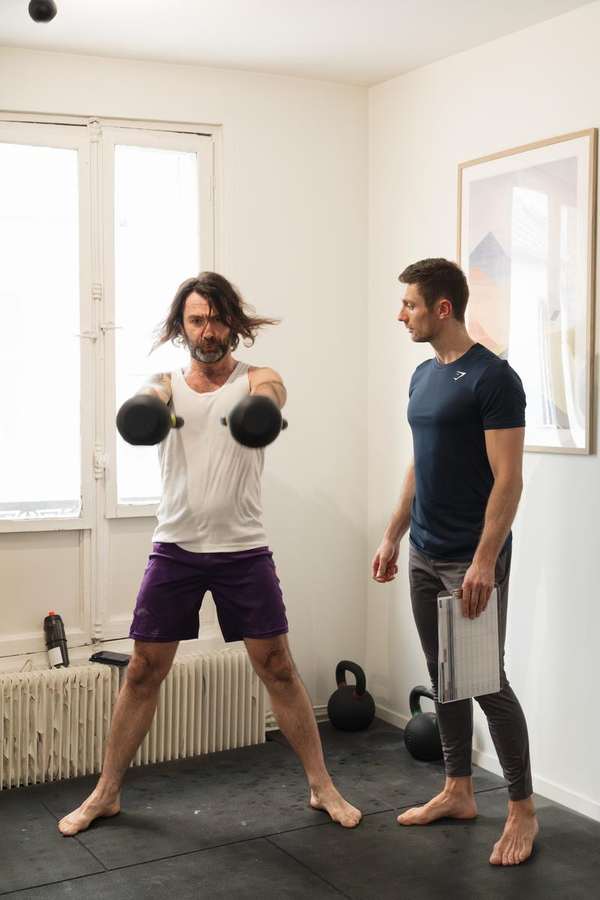
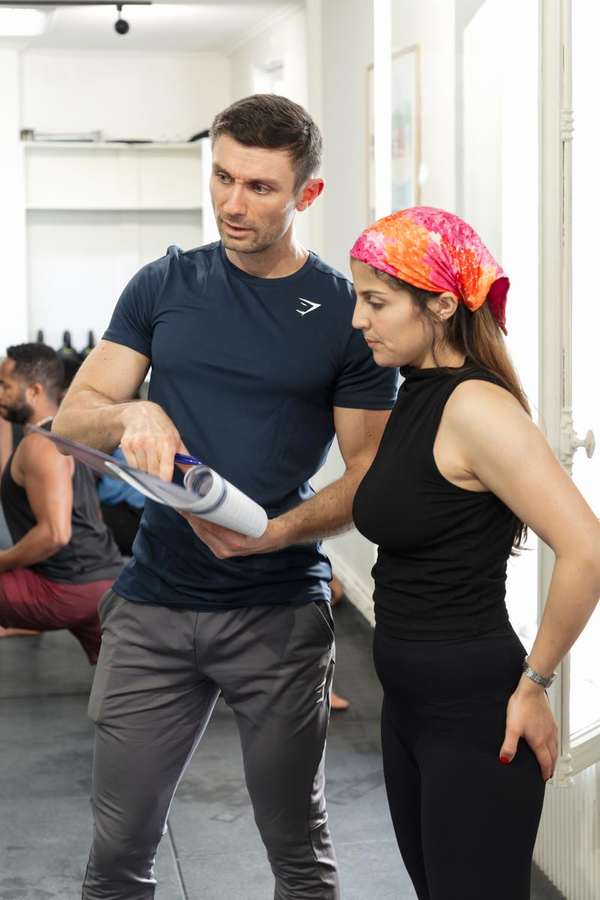
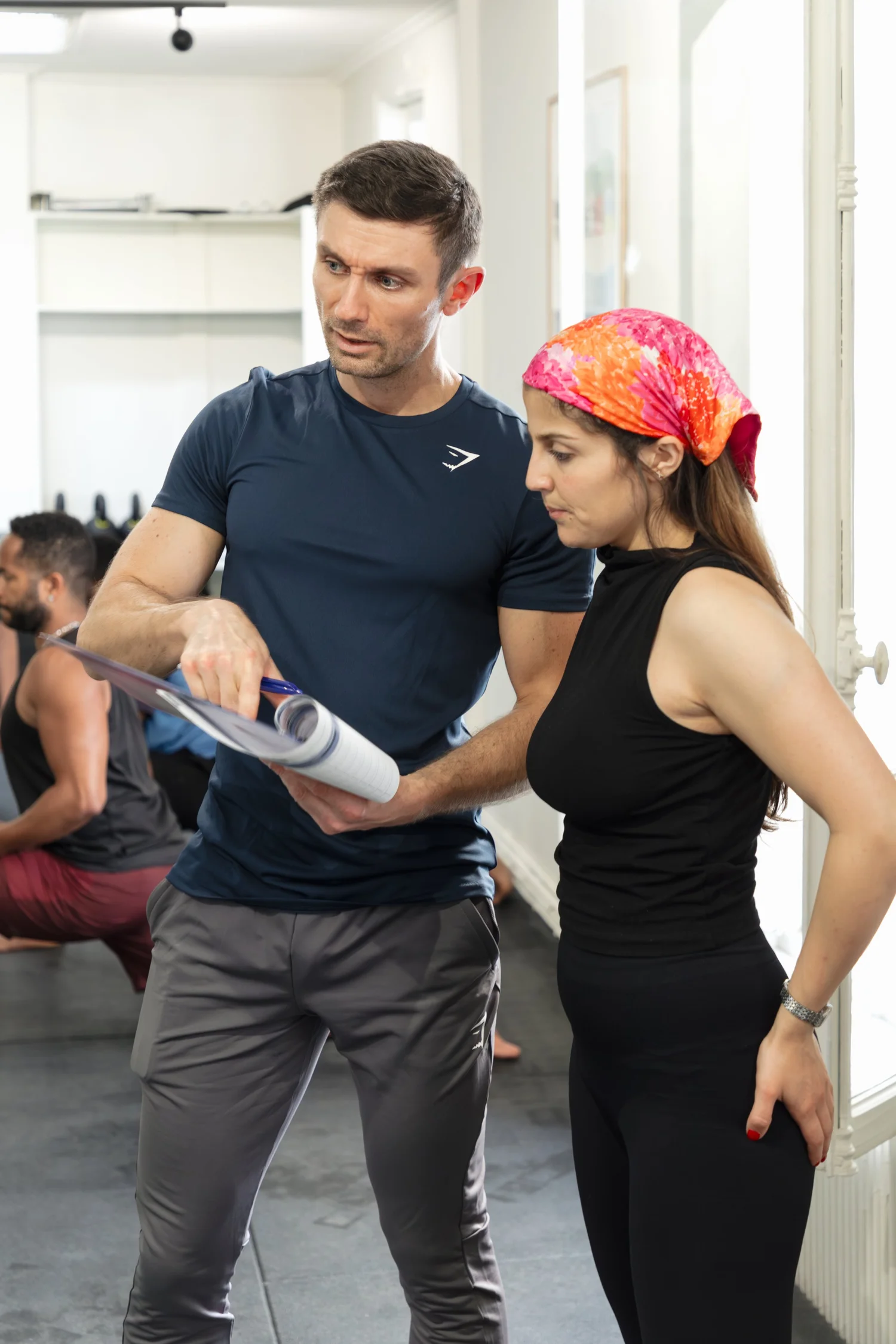
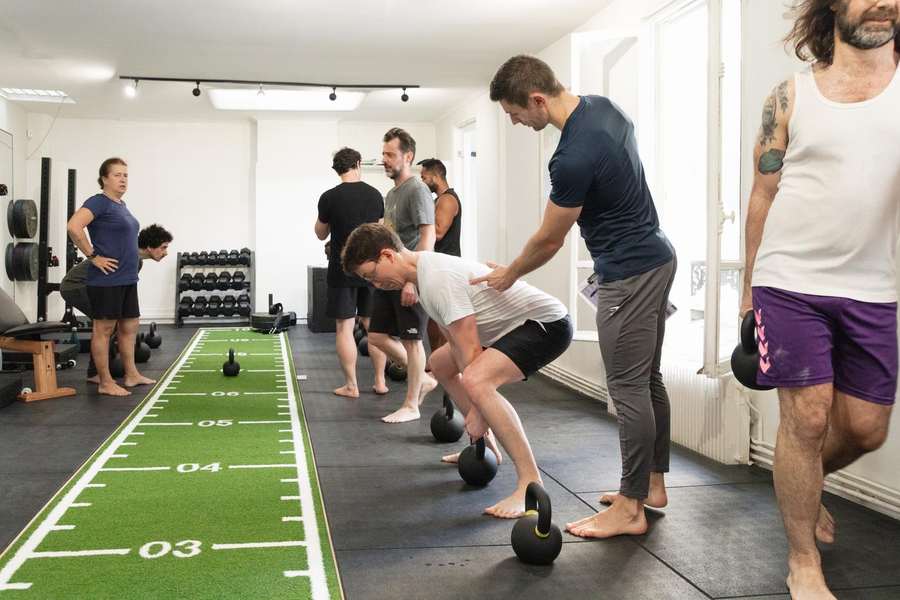
A coach corrects a kettlebell swing

You're recovering from an injury →

Once your physio gives you the green light, the swing and the get-up gradually strengthen your posterior chain and shoulder stability, with loads chosen for you.

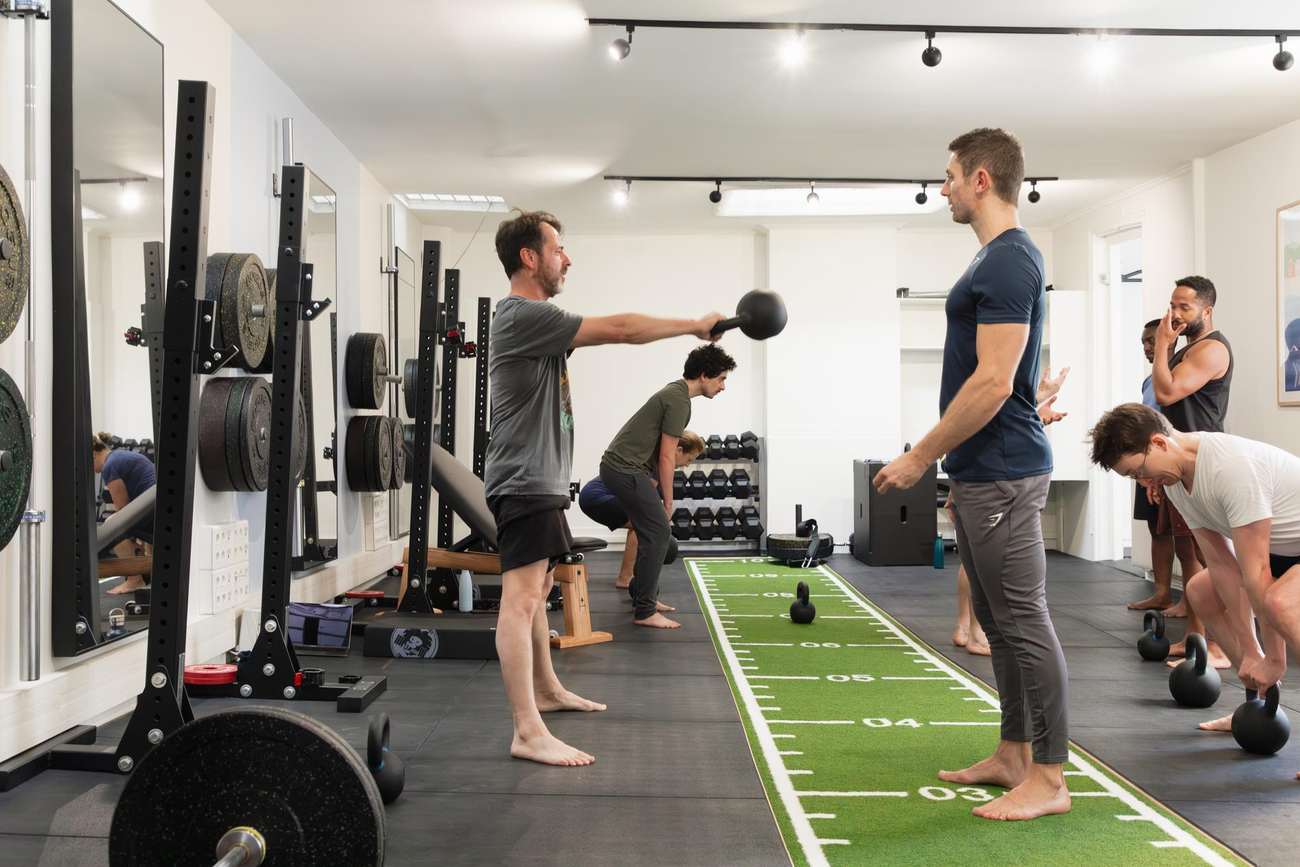
Small-group kettlebell swing

You want to get stronger after 40 →

Grip strength, muscle mass, the ability to get up from the floor and to carry: exactly what keeps you independent for the long run.

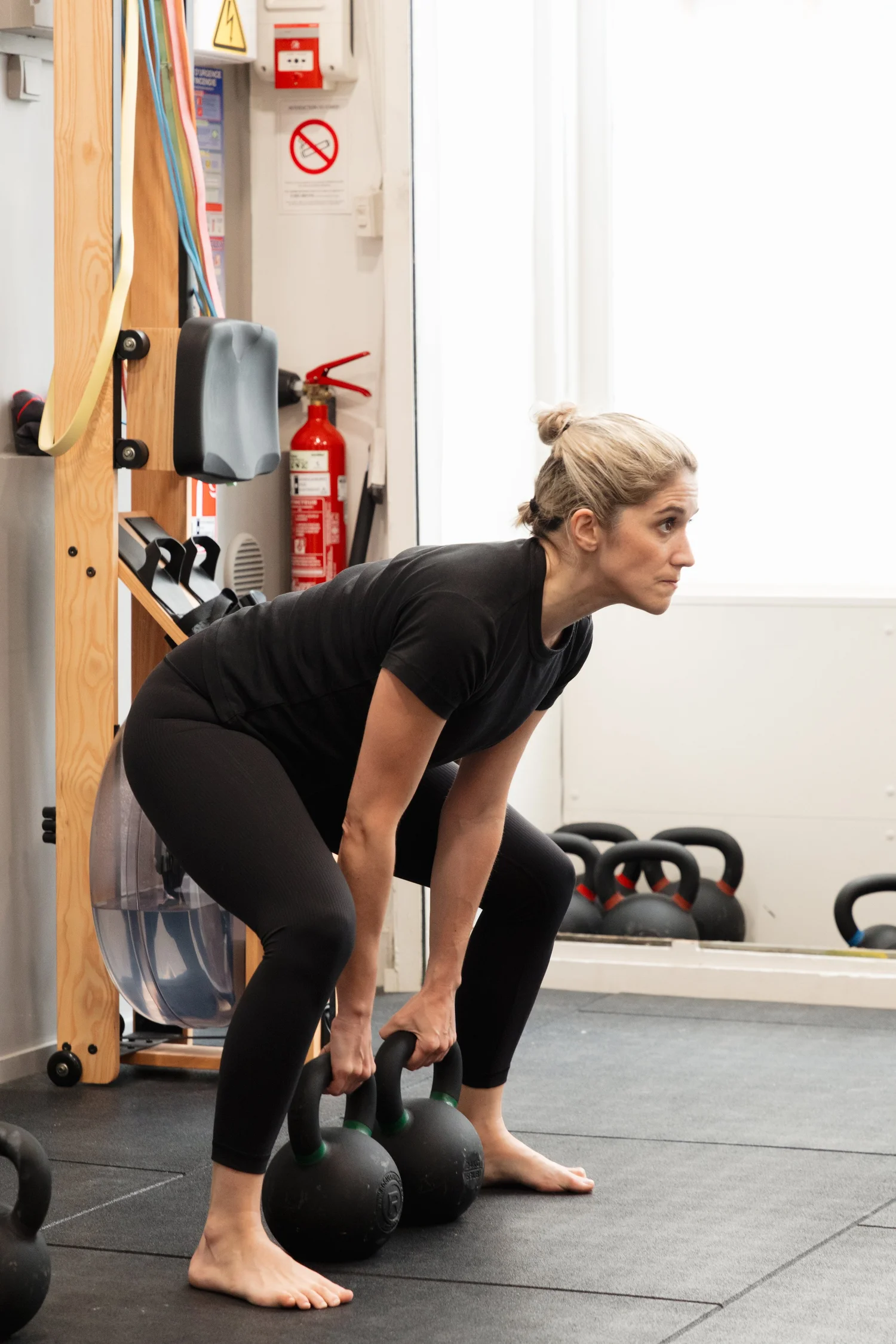
Double kettlebell swing

You want to improve your sports performance →

Hip power for running, jumping and striking, core strength for combat sports, grip for climbing or holding on: the kettlebell is the ideal complement to your sport.

Carry-over

Stronger in training. Stronger everywhere else.

The kettlebell trains movements, not isolated muscles. That's why you feel the effects outside the gym.

  • In daily life: carrying shopping or a child, getting up from the floor, gardening, standing for a long time more comfortably.
  • In running and trail running: more powerful hips and a stronger posterior chain.
  • In combat sports: core strength, explosiveness and grip.
  • In tennis, padel or golf: shoulder stability and transfer of force from the legs to the upper body.
  • In yoga and Pilates: the strength flexibility practices often lack.
  • In strength training: a better hip hinge, useful for the deadlift and the squat.
The school that trains our coaches

"Strength is a skill."

StrongFirst is an international school of strength founded by Pavel Tsatsouline, who did much to popularise the kettlebell in the West. Its teaching treats strength as a technical skill: it is learned, practised and refined. Its "hardstyle" approach focuses on tension, breathing and hip power: the same style used in several of the studies cited above.

StrongFirst trains and certifies instructors to demanding standards, with three main certifications:

SFGkettlebell (levels I and II)
SFLbarbell
SFBbodyweight

At Milon-Club, the whole team is StrongFirst-certified.

Milon-Club is an independent club: it is not affiliated with StrongFirst, whose certifications our coaches hold individually.

Discover our method →
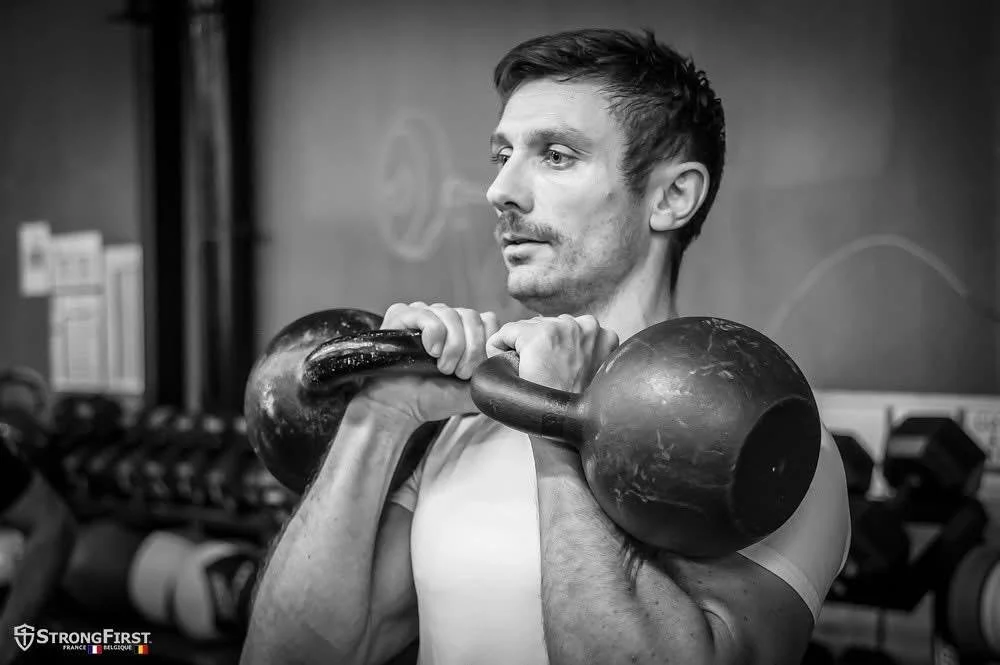
Félix, a StrongFirst-certified coach, with a kettlebell

The principles you'll find in every session

  1. Technique before load: weight is only added to a movement you've mastered.
  2. Tension and breathing: brace and breathe at the right moment, to be stronger and protect your back.
  3. Few movements, well mastered: the fundamentals, worked in depth.
  4. Train without burning out: you leave a session stronger, not drained.

We train coaches too. Are you a personal trainer or a coach at a sports club? Our StrongFirst-certified coaches will pass on the kettlebell method to you. Training for fitness professionals

What you'll learn

Learn the 6 fundamental kettlebell movements

These are the six core movements of hardstyle kettlebell, the ones assessed by the SFG certification. You learn them one by one, in order, and only move on to the next once the previous one is solid.

  1. 01

    The swing

    The king of kettlebell movements: an explosive hip extension. Power, posterior chain and conditioning.

  2. 02

    The get-up

    Getting up from the floor with the kettlebell held at arm's length. Shoulder stability, mobility and control.

  3. 03

    The goblet squat

    The squat with the kettlebell held at your chest: to learn to squat properly and gain mobility.

  4. 04

    The clean

    Bringing the kettlebell smoothly from between your legs to your shoulder. The transition into the press.

  5. 05

    The press

    Pushing the kettlebell overhead. Shoulder strength and full-body tension.

  6. 06

    The snatch

    From between your legs to overhead in a single movement. The most technical movement, and the most complete.

A member lifts a kettlebell, guided by a coach
Our role

A powerful tool. As long as you use it well.

The kettlebell doesn't forgive sloppy technique: a swing done as a squat, a rounded back, arms pulling instead of the hips, and the benefits vanish. The studies cited above all looked at supervised programmes. That's the whole point of learning with certified coaches.

01Learn the right technique

Each movement is taught step by step and corrected on every set, until it becomes second nature.

02Get the load right

The right weight at the right time: enough to progress, never at the expense of technique.

03Plan your progress

Clear goals, regular testing and programming that evolves with you.

04Unlock the full potential

Linking the kettlebell to your goals: getting back into training, your back, independence, performance in your sport.

Book a 15-minute discovery call
Your coaches

Your kettlebell coaches in Paris, StrongFirst-certified

All 5 of our coaches hold the SFG, StrongFirst's kettlebell standard: a rare team in Paris. You can train with any of them: they all follow the same technical standards.

Meet the team →

Training at Milon-Club

Two ways to learn kettlebell in Paris

Small-group Kettlebell class
Guided Practice

The Kettlebell class

Swings and circuits in a small group (8 people maximum), with a structure adapted to each person's level. Included from your membership.

Discover Guided Practice →
A coach goes through an individual programme with a member
Tailored Coaching

An individual programme

In Semi-Private, 2 to 6 people, each with their own programme and individual progress sheet: ideal for learning the 6 movements at your own pace or working towards a specific goal. Also available as Private Coaching.

Discover Tailored Coaching →

Where? 38 rue de Malte, Paris 11th · metro Oberkampf or République · 7 days a week, 50+ sessions a week.

See our offer and pricing →
FAQ

Kettlebell classes in Paris: your questions

Where can I take kettlebell classes in Paris?+

At Milon-Club, 38 rue de Malte, in the 11th arrondissement (metro Oberkampf or République). The club is open 7 days a week: small-group Kettlebell classes, Semi-Private Coaching with an individual programme, or Private Coaching.

Are there StrongFirst coaches in Paris?+

Yes. At Milon-Club, all 5 coaches are StrongFirst-certified (SFG I, and for some SFG II and SFL). The SFG certification is demanding: it validates both the coach's own technique and their ability to teach it. You can check it in the official StrongFirst instructor directory.

Is Milon-Club a StrongFirst club?+

No. Milon-Club is an independent club and is not affiliated with StrongFirst. Our coaches hold the StrongFirst certifications individually (SFG I, and for some SFG II and SFL). You can check them in the official StrongFirst instructor directory. The method taught at the club is the Milon-Club method.

How do I choose a kettlebell coach in Paris?+

Look for three things: a recognised certification (such as the StrongFirst SFG), teaching that puts technique before load, and small groups, so every rep is seen and corrected. A first conversation also lets you check that the coach is interested in your starting point and your goals.

I've never touched a kettlebell. Can I start?+

Yes, and it's actually the best time: you learn the right technique from day one. We start with the basics (hip hinge, core bracing, breathing) before moving on to your first swings.

What weight should I start with?+

Your coach chooses the load with you during your first sessions, depending on the movement and your level. It's often lighter for overhead movements than for the swing. All equipment is provided at the club.

Are kettlebells good for your back?+

Done properly, the swing and the get-up strengthen the muscles that support your back. That's why technique comes before load. If you're in pain, ask a health professional first: we work with our local health partners (physiotherapist, osteopath, dietitian).

Kettlebells or dumbbells: what's the difference?+

A kettlebell's centre of gravity sits away from the handle: it lends itself to ballistic movements like the swing or the snatch, which work the whole body at once. The two tools complement each other, and we also use the barbell and bodyweight.

Do I need to be fit to start?+

No. Progress is individual: we start from where you are, and only increase the load once your technique is solid.

Sources: Jay K. et al. (2011), Kettlebell training for musculoskeletal and cardiovascular health: a randomized controlled trial, Scand J Work Environ Health · Lake J. P. & Lauder M. A. (2012), Kettlebell swing training improves maximal and explosive strength, J Strength Cond Res · BELL trial (2022), Effects of supervised high-intensity hardstyle kettlebell training on grip strength and health-related physical fitness in insufficiently active older adults, BMC Geriatrics.

Your first kettlebell class in Paris

Try the method. Measure your results.

Your first kettlebell class in Paris starts with a 15-minute discovery call: we get to know what you expect and need, and point you to the right format.

Book my discovery call Free, no commitment Not quite ready? Leave us your details and we'll call you back.
Book my call
A question?